
Week 4 of 10 – Creative Surplus: A Chapter a Week
A note before we begin. Next week's post opens Part II of this series—the transition from ideas to practice. It begins with the first of three movements: discovery, the art of paying attention to what is already present in your work but unacknowledged.
Paid subscribers will receive the full chapter – subscribe here.
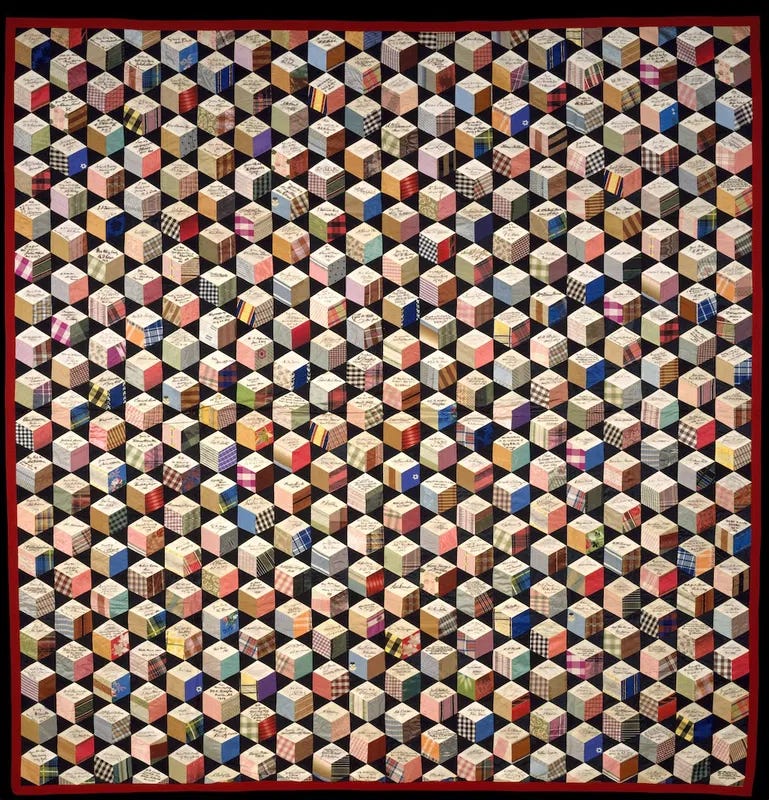
Aesthetics is what does not fit in your job description.
That is the whole argument. But let me unfold it, because this simple idea has consequences that reach into how we think about creativity, identity, and professional life.
Subject and Object
Consider two dimensions. The first is the subject: the person—designer, accountant, gardener, teacher, engineer, nurse. The question is whether they can use whatever does not fit their professional role. That is the measure of their creativity. Not their skill within the role, but their capacity to exceed it.
The second is the object: the things they make. Do those things carry a quality that exceeds their function? Do they have aesthetics? A report that is not just clear but beautiful. A garden that is not just productive but strange. A lesson that is not just effective but memorable in a way that has nothing to do with the curriculum.
Your job description is your “cutout” in the world: the shape the market gives you, the professional archetype you occupy. Periodically, you peek out behind it. Aesthetics is the pun a barista writes on a coffee cup. It is the quirky hat a professor wears on the first day of fall. It is the hand-drawn diagram that the engineer leaves on the whiteboard. It is the human leaking through the professional.
These moments are not trivial. They are the visible evidence of a person’s creative surplus finding its way into the world. They are the places where someone is more than their role, and where their work is more than its function.
Ambiguity as Aesthetic
When we confuse people, something interesting happens. We ask them to restructure their values and ways of being in the world. We force them to reach for a new frame, a new category, a new way of understanding what they are encountering. This is uncomfortable. It is also one of the most powerful things a creative person can do.
Confusion–or more precisely, constructive miscommunication–is a prompt for creativity. Not the confusion of incompetence, but the confusion of encountering something that does not fit. The more we can place ourselves in a safe and generous space of misunderstanding, the more we discover what we actually believe. Constructive miscommunications ask you to understand your own values by forcing you to articulate them in response to something unexpected.
This interest in exploration can become a habit: a cycle of questioning, articulation, and integration. The act of writing and rewriting is creativity. Total clarity is production, and production is never creative. Creativity always carries some ambiguity – some residue of the unknown that survives the articulation.
I am not arguing for obscurity. Obscurity is a failure of communication. I am arguing for high-context confusion—the kind that creates space for the other person to bring their own meaning, interpretation, and surplus to the encounter. When both people in a conversation are working at the edge of what they know how to say, something new can emerge that neither of them brought into the room.
That something is thirdness. We will return to it in Week 9.
